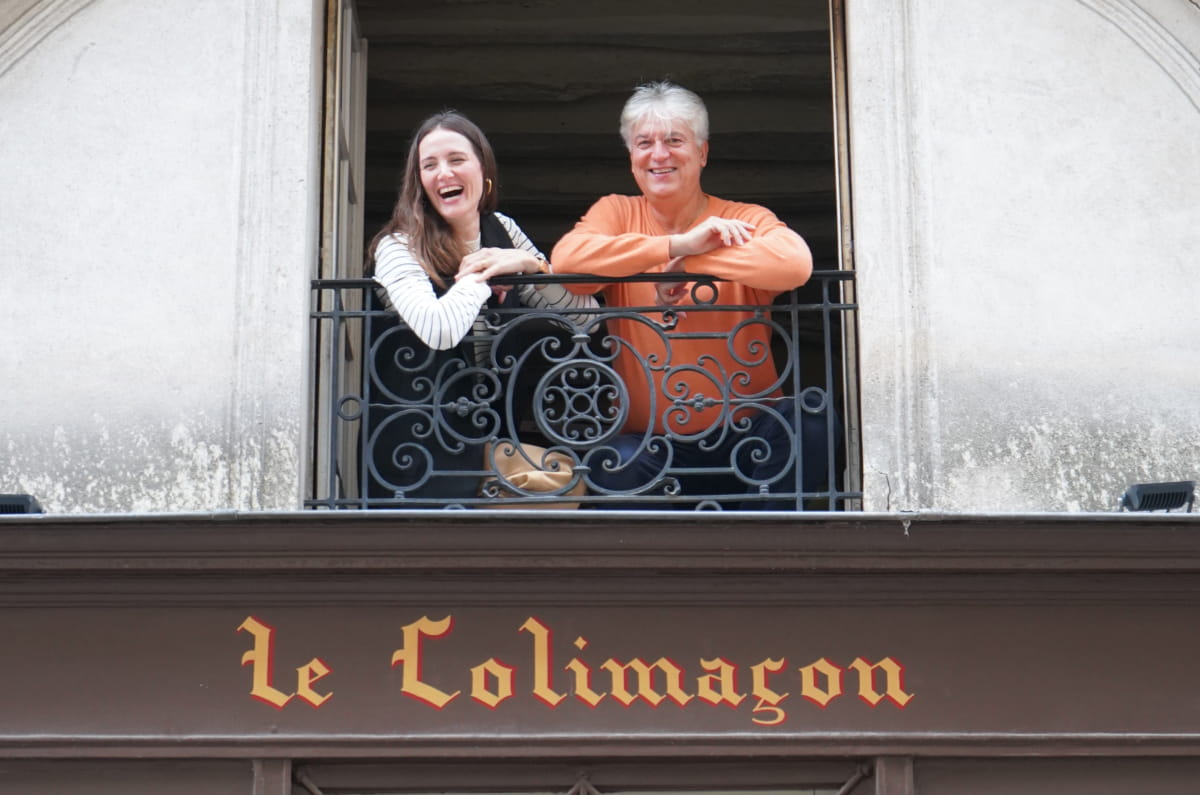
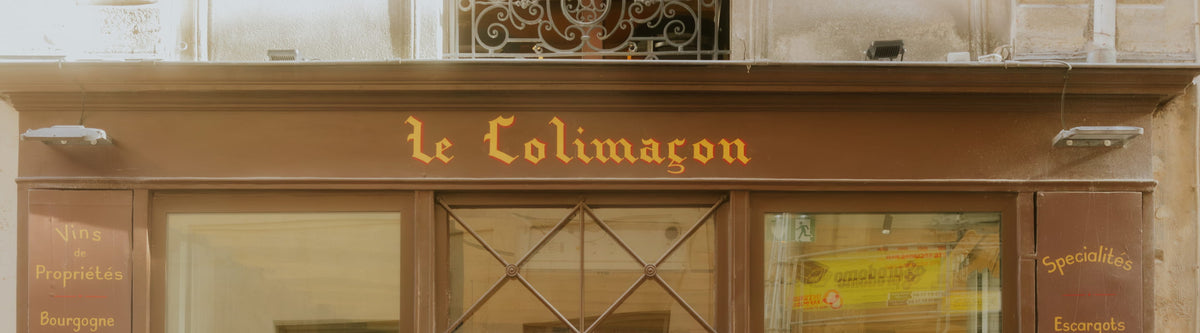
My dad’s restaurant is named after a staircase. In French, un escalier en colimaçon means a spiral staircase, named for its resemblance to a snail's shell. And that’s exactly what connects the two floors of Le Colimaçon, tucked inside a building dating back to 1732 at 44 rue Vieille-du-Temple. I have been going up and down those steps for over fifteen years, first as a server, then as the person who trained the servers to make American guests feel at home, and now as the person who has opinions about every new dish.
So when friends ask me where to eat in Paris, you can probably guess my answer! Here’s what I’d order, what you should know about French dining, and a few insider tips I’ve picked up over the years. There’s a French dining cheat sheet at the end, so you can order with confidence.
First, the neighborhood
Le Marais means “the marsh,” which is hard to believe today, since it’s one of the most charming and most photographed parts of Paris. It really was a marshland once, before it was drained and built up, and the aristocracy later filled it with hôtels particuliers (grand private townhouses). Many are still standing, so walking here feels like moving through several centuries before lunch.
Rue Vieille-du-Temple is one of the historic streets running through Le Marais. Its name refers to the medieval Knights Templar, who once had a large presence in this part of Paris. Today, it’s lined with boutiques, galleries, cafés and restaurants, but you can still feel the neighborhood’s history as you walk through it.

Meet the people behind the room
Behind Le Colimaçon are two men from different generations with different backgrounds and their own ways of doing things. Somehow, it works beautifully.
My dad, Didier Jourdan, comes from a family of charcutiers (specialists in preparing charcuterie, including pâtés, terrines and cured meats) and vignerons (winegrowers), so he has been around serious food and wine his whole life, and it shows in how he thinks about a plate and what goes in the glass beside it. His partner, Nicolas Thiery, is around my age and comes from a family rooted in hospitality and hotels. They run the restaurant together, and they complement each other in a way I truly admire, as a business owner myself.
I can take some credit for how it started. Nicolas was my friend first: I met him one summer almost twenty years ago. He and my dad were both looking for a restaurant in Paris, so I introduced them. The rest is history, and it remains my most successful piece of consulting to date.
What I admire most about my dad is how he gives people room to grow, and Nicolas does the same. Many team members have been there for years, some for more than a decade, which says a lot about the environment they’ve built. Marine, the restaurant manager, is the best example. She started as a server and worked her way up, and now she holds the whole team together with joy and energy. I think you can feel that when you walk in. There’s a real sense of familiarity among the team, and I love seeing that.

Step inside and make yourself at home
Thanks to the high windows, you can see the room before you reach the door: warm light, and navy velvet curtains framing the tables. In France it’s polite to say bonjour or bonsoir (hello / good evening) as you walk in, and you’ll hear it back from everyone. The staff shows you to your table and takes your coat, and the mix of laughter, glasses clinking, and music in the air feels more like arriving at a dinner party at your French friend’s place.
Listen to the accents around you, too. I’ve always loved the mix of French and international guests, including regulars who’ve been coming back for years. You’ll hear French, English, and plenty of other languages. Some people think a restaurant full of tourists is a red flag, but Paris is an international city after all. What matters to me is the quality of the food, the people and the experience.
|
Where to sit
Thanks to that spiral staircase, Le Colimaçon has two floors, and each gives you a different evening. Downstairs is where I sit when I want the full atmosphere of the restaurant, because I love watching people arrive and settle in for dinner. Upstairs is where I go to watch the dishes come out of the kitchen, which is a treat if you’re as curious about the food as I am. And if you’re after the most romantic table, ask for Table 14 (upstairs, by the window). It’s one of the most requested tables, so book well in advance and make sure to ask for it when reserving. It goes to whoever books and requests it first. And now you know its number. 😉 |
 |
Like many Parisian restaurants, Le Colimaçon has two dinner services. If you’re coming for the first, keep in mind that your table may be booked again later that evening. But if you’re in the mood for a long dinner, I’d recommend the second service at 9 PM. That’s when you can really settle in, order another glass of wine or a digestif, and enjoy the evening without worrying about another reservation coming after you.
You can reserve via the restaurant’s website.
Now for my favorite part: the food. Here are mes incontournables, a.k.a., the dishes I think you absolutely should not skip:
1. Les entrées (the starters)
Quick note for American readers: in France, entrée means the starter, not the main course.
Hear me out: I know snails can be intimidating, but I like to think of these as beginner snails: They're deliciously buttery, balanced by garlic and parsley, and nestled in puff pastry shells, so you don’t have to wrestle an actual snail shell to get to the good stuff. Trust me and try them with an open mind.
The pain perdu recipe comes from my great-grandmother, who made it with baguette instead of the pain de mie (soft sandwich bread) often used for French toast. At Le Colimaçon, it meets foie gras, smoked duck breast, and seasonal fruit (poire 🍐, pomme 🍎, or pêche 🍑), depending on the season. I could eat it for breakfast, lunch, and dinner if I could.

2. Les Plats (the mains)
While it is a typical French dish, you won’t find it on many menus. The meat is mild and tender, a little like chicken, and here it comes wrapped in lard with roasted vegetables and creamy mashed potatoes.
Confit comes from the verb confire, to preserve. Traditionally, duck legs are salted, cooked slowly in their own fat, and stored in it, a technique from southwest France that kept meat through the winter. The meat falls off the bone, and it comes with potatoes cooked in duck fat, which is, as we all know, the superior form of potato.
 💡 My tip: I love ordering several dishes to share so everyone can taste a little bit of everything. Just tell your server, on va tout partager (we’re going to share everything), and ask if they can bring the dishes out in stages rather than all at once.
3. Les DessertsIt’s hard to choose just one, but my pick is the mi-cuit au chocolat, with salted caramel sauce and vanilla ice cream. Not to be confused with the fondant. Mi-cuit literally means “half-cooked.” Think of a rich chocolate cake with a warm, molten center. You’ll sometimes see fondant au chocolat used for a similar dessert, although the texture can vary from one restaurant to another. |
 |
Look for the little fait maison symbol on French menus. It indicates dishes prepared on-site from raw ingredients, with certain exceptions allowed under French regulations. At Le Colimaçon, almost everything is made in-house, from the starters to the desserts. One exception is the artisanal ice cream and sorbet, which come from Maison Antolin.
In France, matching wine to food is so natural that it has its own phrase: un accord mets et vins (a food and wine pairing). Accord means “agreement,” and mets is the slightly formal word for a dish, so a good pairing is quite literally an agreement between your plate and your glass.
A French wine list can be intimidating, but let me reassure you: the staff at Le Colimaçon knows it by heart. Whenever the chef introduces a new dish, they hold a tasting so they can suggest the top pairings at different budgets. And, I don’t mean to brag, but the wine list is excellent, with very interesting cuvées, including some beautiful Premiers Crus and Grands Crus. Thanks to the restaurant’s partner Dvine, they can serve rare wines by the glass.
If you’re unsure what would pair well with the dishes you ordered, ask your server for a recommendation. Not only is it completely normal, but it’s often the best way to discover something new. Try telling them what you’re ordering, what you usually like and what you’d like to spend, then let them take it from there. If you want the French, qu’est-ce que vous nous conseillez ? (what would you recommend?) will do the job.

Time to book
Le Colimaçon has been my dad’s third child for over 15 years. I’ve watched him and Nicolas build something special, and I’ve been lucky enough to be part of it in different ways over the years.
In the summer of 2017, I was going through a big transition in my life and ended up working at the restaurant for a few months. I even worked on my birthday. That evening, a beautiful bouquet of flowers arrived from Cris, who was back in New York. We’d only been together for a few months at the time. It’s one of those memories that has stayed with me.
There are so many moments like that tied to Le Colimaçon. It’s a piece of home for me, and I love getting to share it with other people.
So if you find yourself in Paris, go have dinner there. Order something you wouldn’t normally try, ask the team for a wine recommendation, and enjoy yourself. And please tell them you’re part of the Hello French community! They’d love to know. And if you do go, tell me what you ordered. I genuinely want to know!
You can book via the restaurant’s website.

Come Have Dinner With Me in Paris!
On Wednesday, November 25th, Le Colimaçon will be privatisé (reserved exclusively for a private event), and I’d love for you to join us!.
We’re putting together a special seven-course dinner featuring Kasnodar caviar and Champagne Bollinger, with carefully selected food and champagne pairings, or accords mets et champagnes, as we say in French.
My dad and I will both be hosting, which makes it especially meaningful to me. The restaurant will be ours for the night, but anyone can reserve a seat. It’ll be a small, intimate evening and I’d love to see some of you there!
WEDNESDAY, NOVEMBER 25TH | 9 PM | 7 COURSES | €250 PER PERSON
Reserve your seat on the restaurant’s website, then use the cheat sheet below to practice your lines before you go.

🇫🇷 Your French Dining Cheat Sheet
- Bonjour / Bonsoir ! = Hello / Good evening!
- Nous avons une réservation au nom de [last name]. = We have a reservation under [last name].
- Vous avez une table pour deux ? = Do you have a table for two?
- Je voudrais réserver pour le deuxième service. = I’d like to book for the second seating.
- La carte = The à la carte menu
- Un menu = A prix fixe menu (several courses for a set price)
- Fait maison = Homemade / prepared in-house
- Vous avez fait votre choix ? = Have you decided? (Something your server might ask.)
- Je vais prendre… = I’ll have…
- Quelle est la spécialité de la maison ? = What’s the house specialty?
- Qu’est-ce que vous nous conseillez ? = What would you recommend?
- On va tout partager. = We’re going to share everything.
- Est-ce que ce plat contient du gluten ? = Does this dish contain gluten?
- Je suis allergique aux noix. = I’m allergic to nuts.
- Un accord mets et vins = A food and wine pairing
- Un accord mets et champagnes = A food and Champagne pairing
- Une coupe de champagne, s’il vous plaît. = A glass of Champagne, please.
- Un verre de vin rouge / blanc / rosé. = A glass of red / white / rosé wine.
- Vous avez du vin au verre ? = Do you have wine by the glass?
- Quel vin irait bien avec ce plat ? = Which wine would go well with this dish?
- Une carafe d’eau, s’il vous plaît. = A carafe of tap water, please.
- Une assiette de fromages = A cheese plate
- Un plateau de fromages = A cheese platter
- Vous prendrez un dessert ? = Will you be having dessert? (Something your server might ask.)
- On va partager un dessert. = We’re going to share a dessert.
- Un digestif = An after-dinner drink
- Ça a été ? = Was everything okay? (Something your server might ask.)
- L’addition, s’il vous plaît. = The check, please.
- On peut payer par carte ? = Can we pay by card?
- Est-ce qu’on peut payer séparément ? = Can we pay separately?
- Merci beaucoup, on s’est régalé(es) ! = Thank you so much, we really enjoyed our meal!