
When people hear French immersion, they often imagine one thing: moving to France. Living in Paris, hearing French all day, ordering coffee in French, and navigating daily life in the language.
That is one form of immersion, but it is not the only one, and it is not the most important one.
What actually builds fluency is consistent daily contact with the language, wherever you live. The brain learns languages through repeated exposure over time, not occasional intense study sessions. Cognitive science calls this distributed practice. Learning spread across many small moments creates stronger neural pathways than learning packed into a single block. Ten minutes of French every day will often move your brain forward more effectively than studying for two hours once a week.
The real question, therefore, becomes simple: where can French already show up in your day?
You do not need extra time. You need repeated contact.
You might listen to French music while cooking, play a podcast while commuting, switch your phone language to French, or read a short article or an Instagram caption in French. These moments are small, but repeated daily, they create hundreds of interactions with the language over time.
French immersion works through frequency. Regular contact with the language is what builds fluency.

Your brain uses two learning systems
Language learning relies on two different systems in the brain. One is conscious and analytical. This is the system you use when studying grammar rules, memorizing verb tables, or learning vocabulary lists. It helps you understand how the language works. The second system is automatic and intuitive. It learns through exposure, repetition, and pattern recognition.
Fluency lives in this second system.
When you repeatedly hear phrases like il y a (there is / there are), on y va (let’s go), or il faut que (one must / you have to), your brain gradually stops translating them word by word. Instead, it begins recognizing them as patterns. That is when language starts to feel natural.
Immersion is how you train this automatic system. Instead of studying only grammar, start noticing patterns as you listen to French. Pay attention to expressions that appear constantly in conversation, such as du coup (anyway) or ça marche (sounds good), or je vais (I will) followed by another verb. The brain absorbs patterns much faster than isolated vocabulary.

Adults can recreate the way children learn language
Children learn language through exposure and interaction. They hear thousands of sentences before they ever speak. They experiment with sounds, repeat what they hear, make mistakes, and slowly build patterns in their brain.
Adults often try to learn a language almost entirely through studying, but the brain still relies on the same mechanisms: exposure creates familiarity, repetition builds patterns, and interaction activates the language.
You can recreate this environment intentionally. Watching a short scene from a French TV show each evening, listening to a French podcast during the week, reading small pieces of French regularly, or repeating phrases you hear out loud all help build those internal patterns. You do not need hours of study. You need frequency.
Quality of input matters
Not all exposure has the same effect. Research in cognitive psychology shows that attention improves memory retention. When you are interested in what you are hearing or watching, your brain processes the information more deeply.
Watching a French TV show you genuinely enjoy often teaches you more than forcing yourself through vocabulary drills that feel disconnected from real life. Choose content that actually interests you: a French series you want to binge, interviews with artists you like, French YouTube channels about cooking or travel, or music you enjoy listening to repeatedly. When your brain is engaged, the language stays with you much more easily.

Emotion strengthens memory
Emotion also plays an important role in how the brain stores information. When something moves you, surprises you, or makes you laugh, your brain releases chemicals that strengthen memory formation. That is why people often remember song lyrics years later.
Music, films, and storytelling activate emotional circuits that help anchor language in memory. If a French song stays with you, you will naturally start recognizing the words without consciously memorizing them.
A simple way to use this is to pick one French song you love, listen to it several times, read the lyrics once, and then listen again. The meaning, rhythm, and emotion reinforce each other, and the language begins to stick.
Listening and speaking train different abilities
Listening builds comprehension. It trains your ear to recognize sounds, rhythm, and sentence structure. Speaking activates a different process entirely. When you speak, your brain has to retrieve vocabulary, assemble sentences, and pronounce them in real time. Psychologists call this active recall, and it is one of the strongest ways to strengthen memory.
Both input and output matter.
You can start practicing output in very simple ways: narrating small parts of your day in French, repeating sentences you hear in shows or podcasts, saying basic phrases when you wake up or go to sleep, or even talking to your pet or children in French.
FOR EXAMPLE:
Je prépare le café → I'm making coffee
Je vais travailler → I'm going to work
Bonne nuit → Good night
Tu as faim ? → Are you hungry?
These short sentences train your brain to produce language rather than only recognize it.
What French immersion actually looks like
French immersion happens when the language becomes part of your daily life through small, consistent habits.
A bit of French music while cooking. A podcast during your commute. A scene from a film in the evening. A few sentences spoken during the day.
Each interaction may seem small, but over weeks and months, they accumulate into hundreds of encounters with the language. That accumulation is what immersion really is.

If you want guidance and structure
This philosophy is exactly how we teach at Hello French.
Our group classes and private lessons are designed around immersion and a culture-first approach to learning. From the beginning, we focus on helping you interact with real French through conversation, listening, cultural context, and practical language you can actually use in daily life.
If you want support in creating this kind of immersive environment and practicing regularly with guidance, you can join one of our small-group classes or work with us in private lessons. Both are designed to help you build the kind of immersion that leads to real, lasting progress.
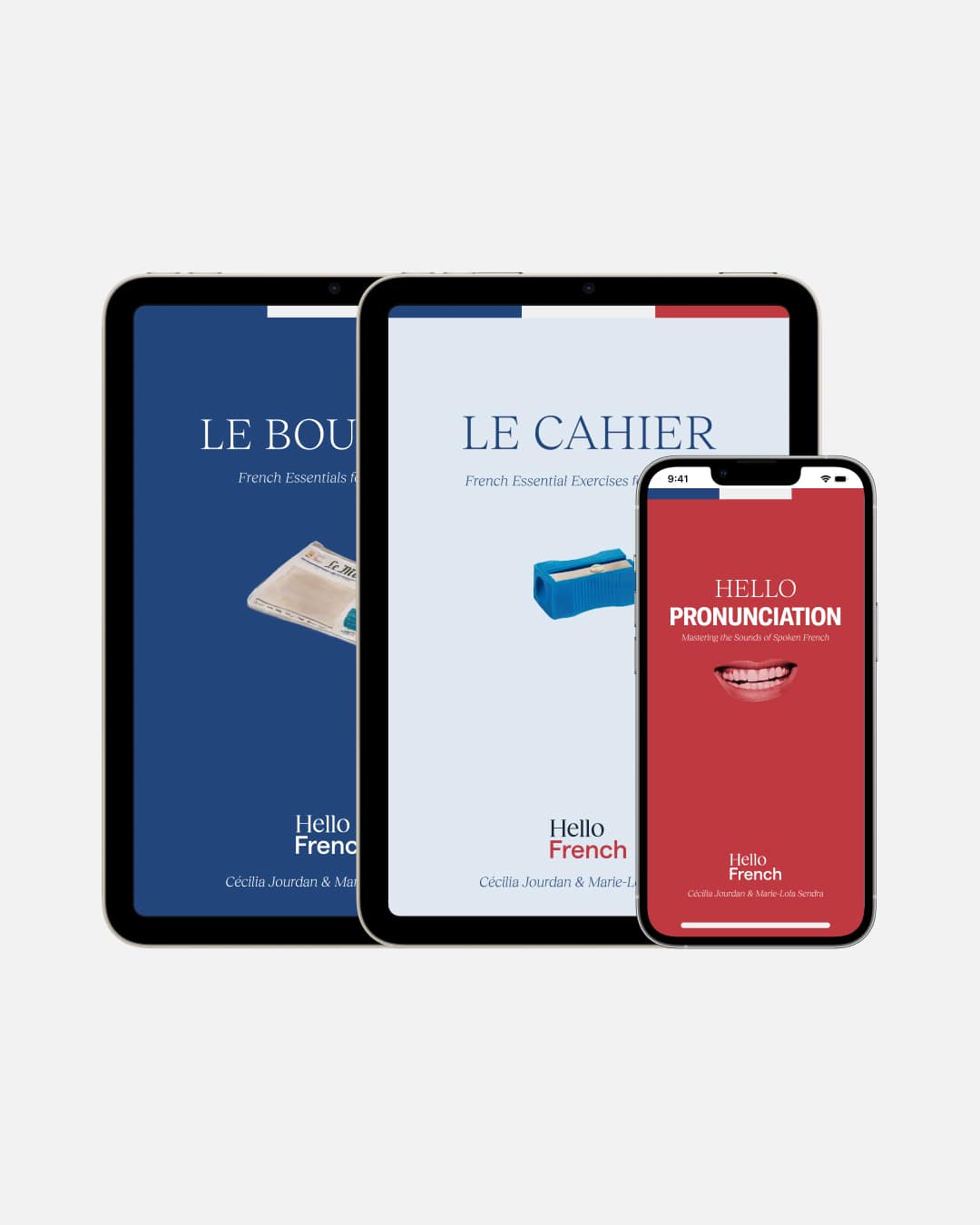
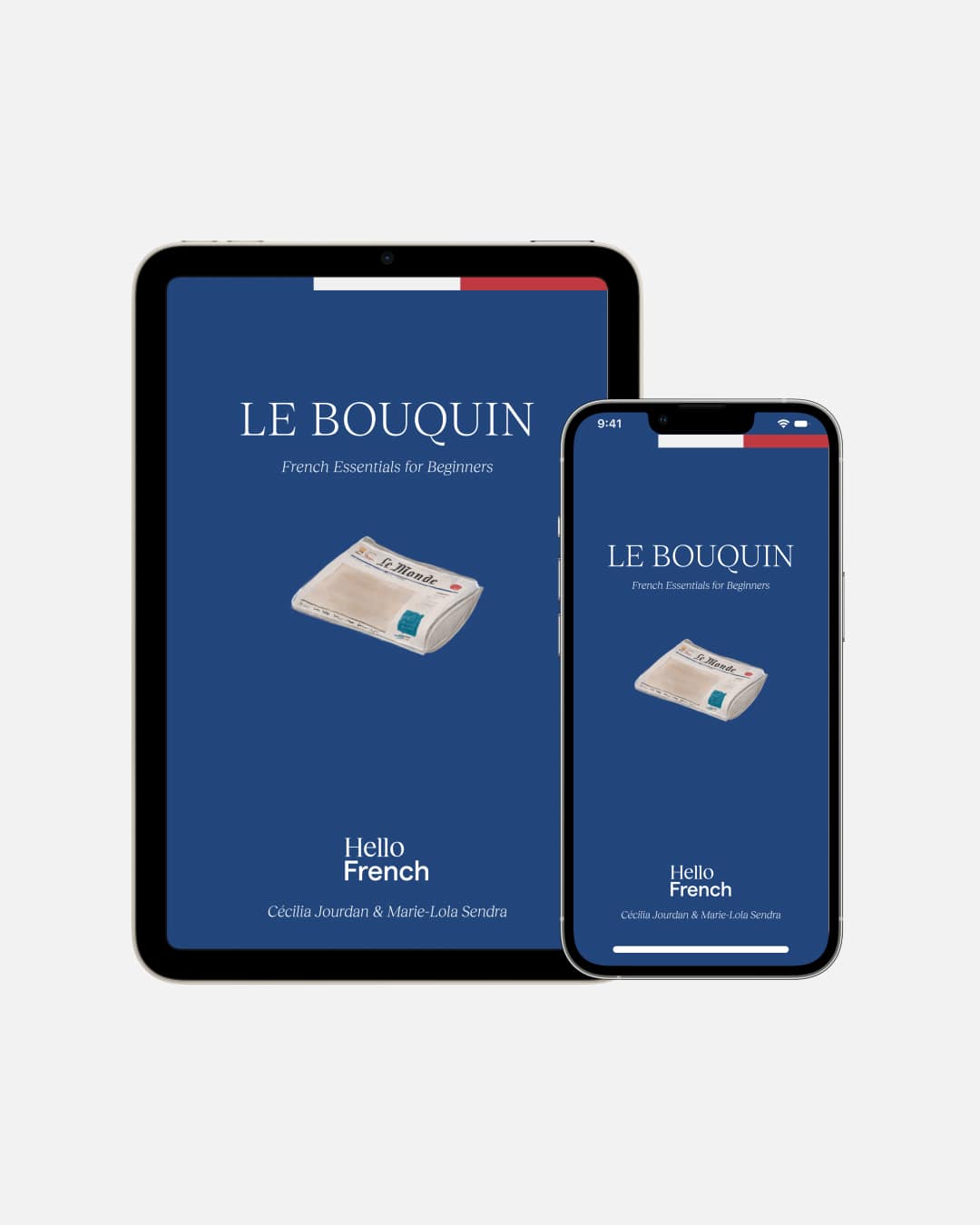
If you prefer learning at your own pace, our best-selling Hello French ebooks for beginners are also designed with the same philosophy in mind. They combine language, culture, and practical examples so you can bring French into your daily life even if you are studying independently.